Pasture-Raised vs Grain-Fed Livestock: What’s the Difference?
When looking into how livestock are raised, one of the most common comparisons people come across is pasture-raised vs grain-fed.
At first, the terms may seem straightforward. But in practice, they reflect two very different approaches to managing animals, land, and feeding systems.
Understanding the difference helps provide a clearer picture of how farms operate and what those choices mean over time.
What does “pasture-raised” mean?
Pasture-raised livestock are animals that spend the majority of their time grazing on open land.
Instead of being kept in one fixed area, they are typically:
- Given access to grass and natural forage
- Managed across larger sections of land
- Moved periodically to fresh pasture
In many cases, farms use systems like rotational grazing to manage this process. This allows pasture to recover between grazing periods and supports more consistent conditions for both the land and the animals.
If you want to understand that system more clearly, it’s explained here:
What Is Rotational Grazing and Why Do Farms Use It
What does “grain-fed” mean?
Grain-fed livestock are animals whose diet is supplemented—or primarily made up of—grains such as corn or soy.
This approach is often used in more controlled feeding environments, where:
- Diets are managed directly
- Growth rates can be more predictable
- Animals may spend more time in fixed areas
Grain feeding is a common practice and can vary widely depending on how a farm is set up.
How do living conditions differ?
One of the clearest differences between pasture-raised and grain-fed systems is how animals interact with their environment.
In pasture-based systems:
- Animals are regularly moved or rotated
- Space is distributed across open land
- Grazing is part of daily behavior
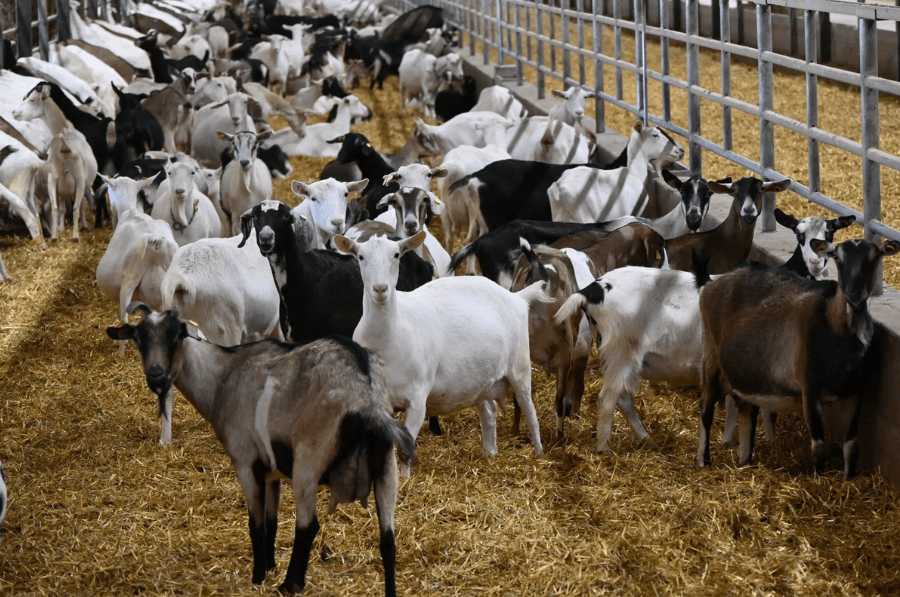
In more confined or grain-based systems:
- Movement may be more limited
- Feeding areas are more centralized
- Conditions are more controlled
These differences are not just about feeding—they reflect how the entire system is structured.
How does land management play a role?
Pasture-raised systems require active land management.
Because animals are grazing directly on the land:
- Pasture must be maintained
- Grazing cycles must be monitored
- Soil and grass health must be considered
This is why methods like rotational grazing are often used—they help balance animal needs with long-term land use.
In contrast, grain-fed systems rely less on pasture availability and more on externally managed feed sources.
Why do farms choose one approach over the other?
There is no single reason why all farms choose one system.
Decisions are often based on:
- Available land
- Farm structure and scale
- Management preferences
- Long-term planning goals
Some farms prioritize pasture-based systems because they want to integrate land and livestock management more closely. Others rely on grain feeding as part of a more controlled setup.
How does this affect how farms operate overall?
The feeding approach often influences more than just diet—it shapes how the entire farm functions.
Pasture-based systems tend to involve:
- More movement and rotation
- Ongoing monitoring of land conditions
- Planning around seasonal changes
Grain-fed systems tend to involve:
- Controlled feeding schedules
- More centralized management
- Different infrastructure and layout
Understanding this helps explain why farms can look and operate very differently from one another.
Why this comparison matters when choosing a farm
For someone researching farms, the difference between pasture-raised and grain-fed is not just a technical detail—it offers insight into how the farm is managed overall.
It can help answer questions like:
- How are animals spending their time?
- How is the land being used?
- What systems are in place behind the scenes?
Closing Perspective
Pasture-raised and grain-fed livestock represent two different approaches to raising animals.
Each reflects a set of decisions about land use, feeding, and overall management.
For those looking to better understand how farms operate, this comparison provides a useful starting point—and helps make sense of the differences that aren’t always immediately visible.