For many Muslim families, the terms Qurbani and halal zabeeha are used interchangeably. Both involve halal animal sacrifice. Both require specific conditions. But they are not the same — and the distinction matters, especially when it comes to planning and preparation.
At Baraka Farm, we work with families year-round — not only during Eid al-Adha season. Understanding the difference between Qurbani and regular halal zabeeha helps families plan ahead, choose the right animal, and fulfill their responsibilities with confidence.
What Is Halal Zabeeha?
Halal zabeeha refers to the process of animal sacrifice carried out according to Islamic law. For an animal to be considered halal, the conditions of the sacrifice must meet specific requirements — the name of Allah must be invoked, the animal must be in good health, and the process must be performed by a Muslim.
Regular halal zabeeha can take place at any time throughout the year. Families who source directly from a halal livestock farm — rather than relying on grocery store supply chains — are choosing a process with full transparency from pasture to zabeeha.
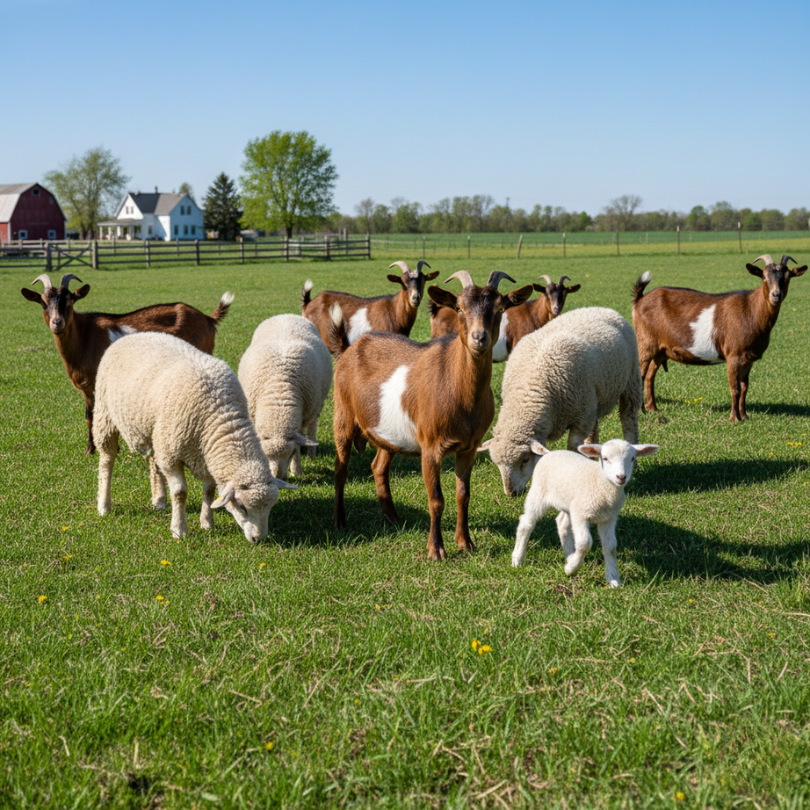
At Baraka Farm, our pasture-raised lambs and goats are raised with calm handling, clean pasture conditions, and deliberate care throughout their lives. Halal begins long before the moment of sacrifice — it begins with how an animal is raised, managed, and treated daily.
What Is Qurbani?
Qurbani is a specific act of worship performed during Eid al-Adha — the Festival of Sacrifice. It is an obligation for eligible Muslims and commemorates the willingness of Prophet Ibrahim (AS) to sacrifice his son in obedience to Allah.
Qurbani is not simply halal zabeeha during Eid. It carries its own conditions:
- It must be performed on specific days — the 10th, 11th, or 12th of Dhul Hijjah.
- The animal must meet age and health requirements: goats and sheep must be at least one year old; cattle must be at least two years old.
- The animal must be free from defect — no blindness, lameness, severe illness, or significant physical impairment.
- The intention (niyyah) must be made specifically for Qurbani, on behalf of oneself or one’s family.
- The meat is typically divided into three portions — for the family, for relatives, and for those in need.
These requirements make Qurbani a planned act of worship — not a last-minute arrangement. The animal must be selected carefully, and the process must be coordinated in advance.
The Key Differences at a Glance
Both Qurbani and regular halal zabeeha share the same foundation: a halal process, a healthy animal, and the correct intention. But where they differ is in purpose, timing, and obligation.
- Regular halal zabeeha can be performed any time of year, for general consumption.
- Qurbani is an act of worship tied to specific days of Eid al-Adha.
- Regular zabeeha has no mandatory distribution requirement.
- Qurbani requires the meat to be shared with family, relatives, and those in need.
- Regular zabeeha does not require a specific niyyah beyond halal.
- Qurbani requires explicit intention made before the act.
For families sourcing directly from a halal livestock farm, the distinction matters because the animal selected for Qurbani must meet stricter eligibility requirements than one reserved for regular halal use.
Why the Animal’s Life Matters for Both
Whether a family is planning Qurbani or sourcing a halal animal at any other time of year, the condition of the animal throughout its life is central to the process.
An animal raised under stress, in overcrowded conditions, or without adequate care does not align with the principles halal is built on — even if the sacrifice itself is performed correctly.
At Baraka Farm, our lambs and goats are raised on open pasture using rotational grazing — a system that keeps land clean, animals healthy, and conditions calm. Animals are moved regularly to fresh pasture, given consistent access to clean water and forage, and handled with low-stress practices from day one.
This standard of care supports both Qurbani eligibility and regular halal sourcing. A healthy, well-raised animal — free from defect and managed with proper attention — is the foundation of a sound halal process.
Planning Ahead for Qurbani or Regular Halal Sourcing
For Qurbani specifically, planning is not optional — it is part of the responsibility. Animals that meet age and health requirements for Eid al-Adha must be identified, finished, and scheduled well in advance. Baraka Farm manages Eid reservations as a deliberate, capacity-controlled process. Families are encouraged to register early to ensure the right animal is available and properly prepared.
For regular halal zabeeha outside of Eid season, availability can be discussed directly with the farm. We work with families, community groups, and organizations who are serious about where their animals come from and how they are raised.
To request current availability or discuss an upcoming reservation, contact Baraka Farm directly at 708-400-5279. Families are also welcome to schedule a visit to the farm to see the animals and pasture firsthand before making a reservation.
A Complete Standard of Halal Care
Whether you are planning Qurbani for Eid al-Adha or looking to source a halal goat or halal lamb at another time of year, the principles are the same: the animal must be healthy, the process must be halal, and the care must be consistent throughout the animal’s life.
At Baraka Farm, halal is not a single moment. It is a standard applied from the first day an animal arrives on pasture to the day a family makes their reservation. That consistency is what families are choosing when they come to us — not just for Eid, but year-round.
To plan ahead for Eid al-Adha or request availability for regular halal sourcing, call or message us at 708-400-5279.