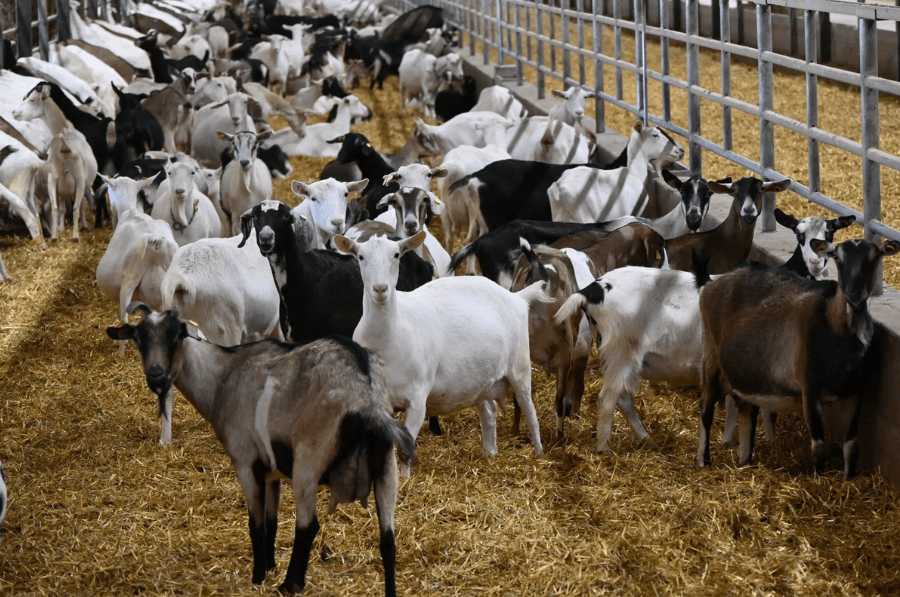
When families start looking for halal livestock — whether for Eid al-Adha, a family occasion, or simply because they care about how their food is raised — they typically encounter two types of sources: farms that raise their own animals, and suppliers or distributors that source animals from elsewhere and process or sell them.
Both may carry the halal label. Both may describe their product as quality. But the experience, the transparency, and what you are actually getting are meaningfully different. Understanding that difference helps families make an informed decision rather than simply trusting a label.
What a Halal Supplier Does
A halal supplier or distributor sits between the farm and the family. They source animals — sometimes from multiple farms, sometimes from auction, sometimes from intermediaries — and either process them at their own facility or coordinate processing elsewhere before selling the product.
This model is not inherently wrong. But it creates distance. When an animal passes through multiple hands before reaching a family, the visibility into how that animal was actually raised diminishes at each step. The halal label applies to the processing — not necessarily to the conditions the animal lived in before it arrived at the facility.
Families who purchase through a supplier are typically buying a processed product. They cannot visit the farm the animal came from. They cannot see the pasture conditions, the handling practices, or the management standards. They are relying on the supplier’s assurances — and the supplier is relying on whoever they sourced from.
What Buying Direct from a Farm Means
Buying direct from a halal livestock farm means the animal you are reserving was born, raised, and managed on that farm — under conditions you can visit and verify before you commit to a reservation.
There is no intermediary. The family deals directly with the people who raised the animal, know its history, and are accountable for every stage of its care. Questions get direct answers. Visits are possible. The standard of care is visible — not described in marketing language, but observable on the ground.
At Baraka Farm, every animal available for reservation has been raised on our pasture in Crete, Illinois. Our lambs and goats are managed on a rotational grazing system, handled calmly, and provided clean water, fresh forage, and adequate space throughout their lives. When a family reserves an animal here, they know exactly where it came from and how it was raised — because they can come and see it.
The Transparency Gap
The most significant difference between a farm and a supplier is not price, not convenience, and not necessarily the halal certification on the label. It is transparency.
Halal, properly understood, is a complete standard of care — not a single step at the end of an animal’s life. It encompasses how the animal was fed, how it was housed, how it was handled, and whether its living conditions reflected the principles of care and responsibility that halal is built on. An animal that was raised in poor conditions, crowded facilities, or without proper attention does not meet that standard — regardless of what happens at the point of processing.
A supplier cannot always tell you how the animal was raised. A farm can — and should. If a farm is unwilling or unable to show you where and how their animals live, that is information worth having before you make a reservation.
The Visit as a Standard
At Baraka Farm, families are welcome to schedule a visit before reserving. This is not a formality — it is how we believe the process should work. Families who visit can see the pasture, observe the animals, and understand the management practices that go into raising halal livestock responsibly.
This level of access is not common in the halal livestock supply chain. Most suppliers do not offer it because the supply chain does not support it. A farm that raises its own animals, manages its own pasture, and is accountable for every stage of an animal’s life can offer it — because there is nothing to hide and everything to show.
For families who take halal seriously — not just as a label but as a standard of care — the ability to visit and verify is not a luxury. It is part of how responsible sourcing works.
What This Means for Eid al-Adha
For Qurbani specifically, the distinction between a farm and a supplier carries additional weight. The animal selected for Qurbani must be healthy, free from defect, and properly cared for. These requirements apply to the animal’s condition at the time of the act — and that condition is a direct reflection of how the animal was raised.
Reserving directly from a farm means families can select their animal, confirm its condition, and have confidence in the full history of its care. Reserving through a supplier means trusting that the animal delivered meets requirements that the family had no opportunity to verify.
At Baraka Farm, Eid al-Adha reservations are managed well in advance. Animals are finished carefully and scheduled deliberately. Families who plan ahead have the opportunity to visit, select, and reserve with confidence — not uncertainty.
Choosing the Right Source
The questions worth asking when evaluating any halal livestock source are consistent regardless of who you are buying from:
- Where was this animal raised, and can I visit?
- What were the pasture and housing conditions?
- How were animals handled day to day?
- Is the operation transparent about its practices?
- Who is accountable if the animal does not meet expectations?
A farm that raises its own animals should be able to answer every one of those questions directly. A supplier may not be able to answer all of them — and that gap matters.
Baraka Farm — Raised Here, Available Direct
Baraka Farm is a pasture-based halal livestock operation in Crete, Illinois. Every animal we raise is managed on our own pasture, under our own standards, and available for direct reservation by families across the Chicago Southland and surrounding region.
We do not source from third parties. We do not operate as a distributor. What we offer is straightforward: pasture-raised halal lamb and goat, raised with care, available through direct inquiry, and open to visits before any reservation is made.
To request current availability or schedule a farm visit, contact us directly at 708-400-5279. For Eid al-Adha planning, early reservation is strongly recommended — capacity is managed deliberately to ensure every animal receives proper care and attention.