When Should You Reserve an Animal for Eid al-Adha?
For many families, preparing for Eid al-Adha includes selecting an animal well in advance of the holiday. One of the most common questions that comes up is simple: when does this process actually begin?
While it may seem like something that can be handled close to Eid, most well-managed livestock farms operate on a much longer timeline. Understanding that timeline helps clarify why early planning is a standard part of the process—not a recommendation driven by urgency, but by how farms are structured to operate responsibly.
How the Timeline Typically Works
At farms that raise pasture-based livestock, preparation for Eid does not begin a few days or even a few weeks before the holiday.
It often starts months in advance.
Animals are:
- Raised through planned feeding and grazing cycles
- Monitored for proper growth and condition
- Managed within a set capacity that aligns with land, pasture, and care standards
This means that by the time Eid approaches, most of the work has already been done long beforehand. What families see closer to the holiday is the result of a process that has been developing over time.
Because of this, availability is not something that expands at the last minute. It reflects what has already been prepared.
Why Earlier Planning Is Common
In practice, families who are familiar with this process tend to begin planning earlier rather than later.
This is not about pressure or urgency. It simply reflects how farms operate when:
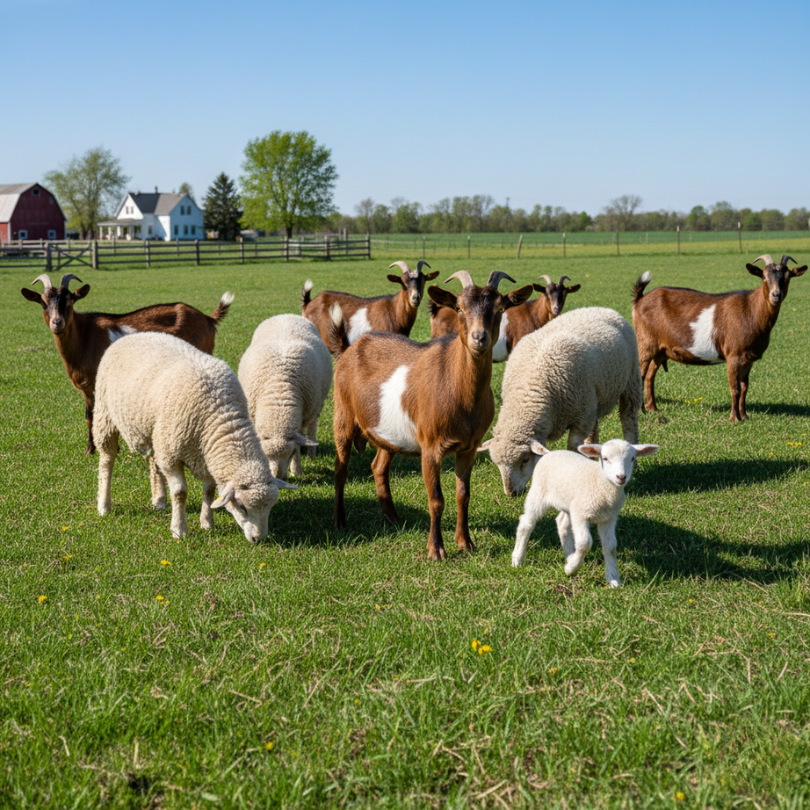
- Animals are raised on pasture
- Grazing is managed in cycles
- Care is structured around consistent, low-stress handling
For example, farms that use rotational grazing move animals between sections of pasture to maintain land health and provide fresh forage. This approach supports both the animals and the land, but it also means herd size and availability are planned carefully in advance.
If you’re unfamiliar with this approach, it’s explained in more detail here:
What Is Rotational Grazing and Why It Matters for Livestock
When systems like this are in place, planning ahead becomes a natural part of the process.
What Families Typically Do
Rather than waiting until the last moment, many families approach Eid preparation in stages.
They may:
- Begin looking into farms ahead of time
- Request availability to understand options
- Take time to learn how different farms operate
- Schedule a visit if they want to see the animals in person
This allows for a more informed decision, rather than a rushed one.
Seeing the environment, the animals, and how they are handled often provides additional clarity.
What Happens Closer to Eid
As Eid approaches, farms are typically working within the limits of what has already been prepared.
At that stage:
- Availability may be more defined
- Options may be more limited
- Decisions often need to be made within a shorter timeframe
This is not because of increased demand alone, but because livestock operations—especially those that are pasture-based—do not scale up instantly.
The structure is intentional.
A Process Built on Preparation
Eid al-Adha is closely tied to preparation and responsibility. That same idea is reflected in how many farms manage their livestock throughout the year.
From grazing systems to daily care, the process is built over time—not assembled at the last minute.
Understanding when to begin planning is simply part of understanding how that system works.
Closing Perspective
So when should you reserve an animal for Eid al-Adha?
For most farms operating with clear standards and structured care, the answer is straightforward:
planning begins earlier than many people expect.
Not out of urgency, but because the process itself is built that way.
Taking the time to understand that timeline allows families to approach Eid with more clarity, and with a better sense of how these decisions are typically made.